

Rough-Terrain Cranes
Request a Job Quote
Submit a Quote Form and a RMS Sales Representative will be in contact with you as soon as possible.
GET A QUOTEDiverse Lifting Capabilities
Performance Capabilities
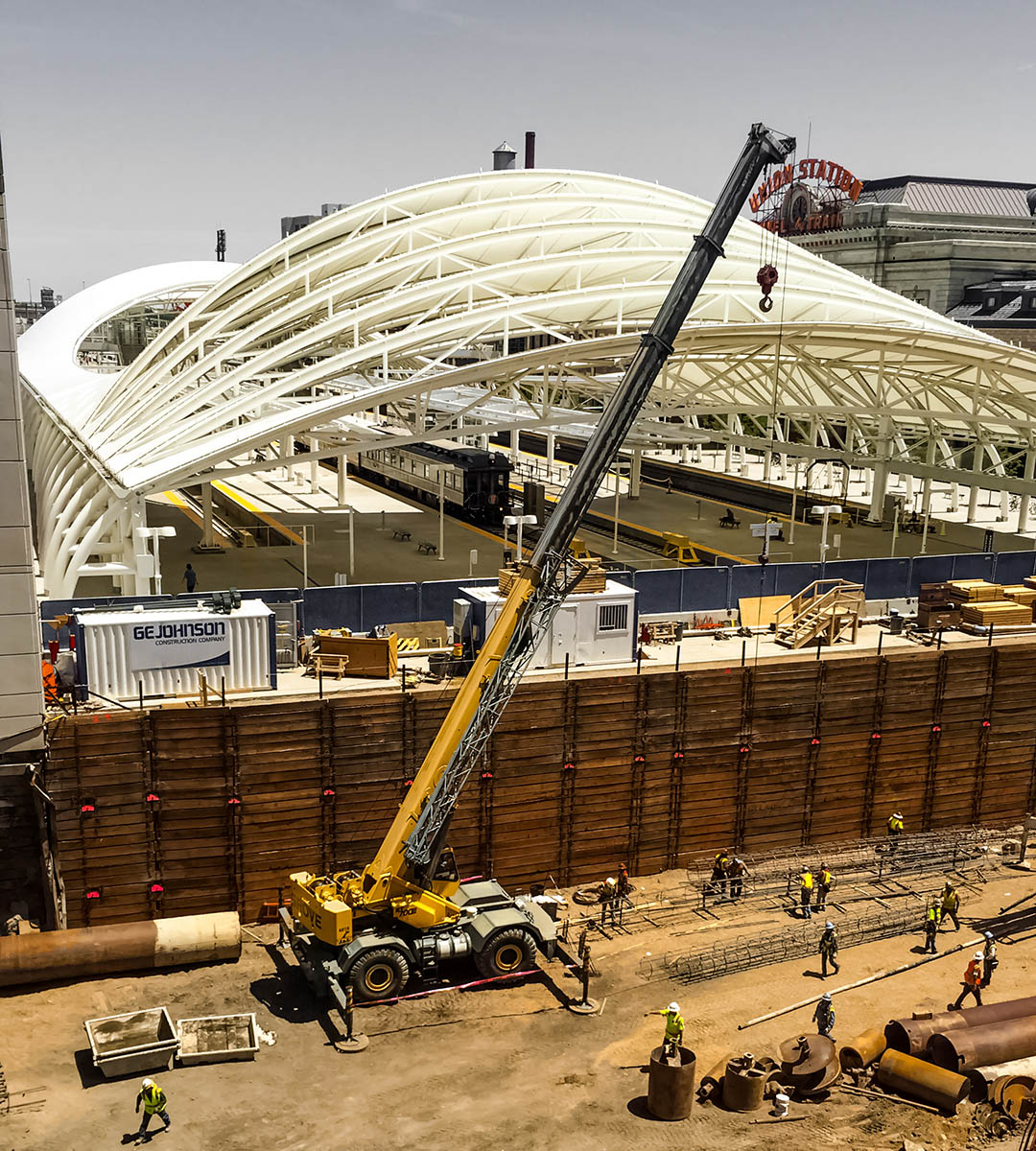
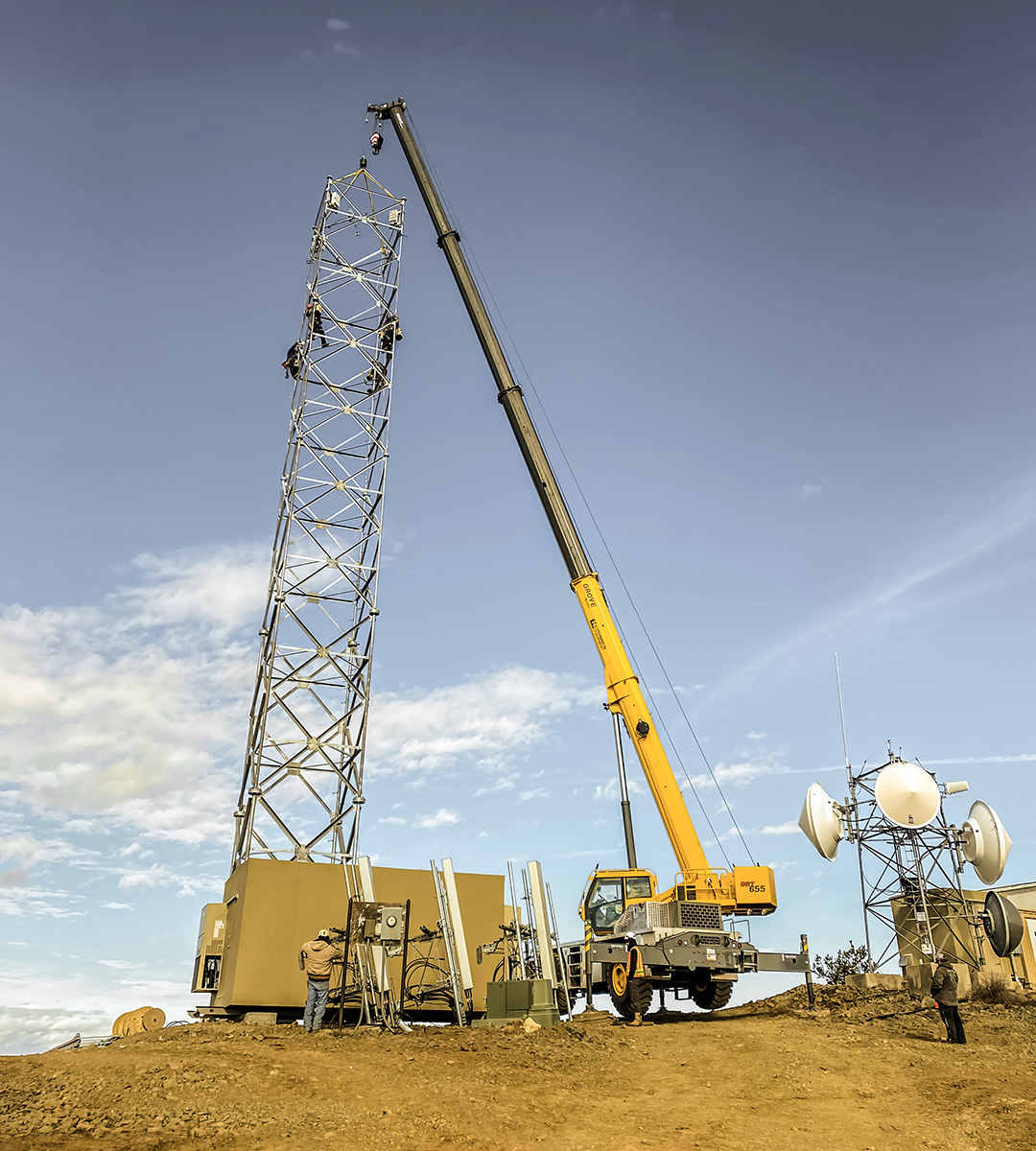
Rough-Terrain Cranes feature a host of advantages over other types of cranes. When compared with Truck Cranes, Rough-Terrain Cranes offer better steering capabilities, traction, and power. They have a lower center of gravity, larger tires for better control, a tighter turn radius for greater maneuverability, and all-wheel drive & steering.
Efficient Support Solution
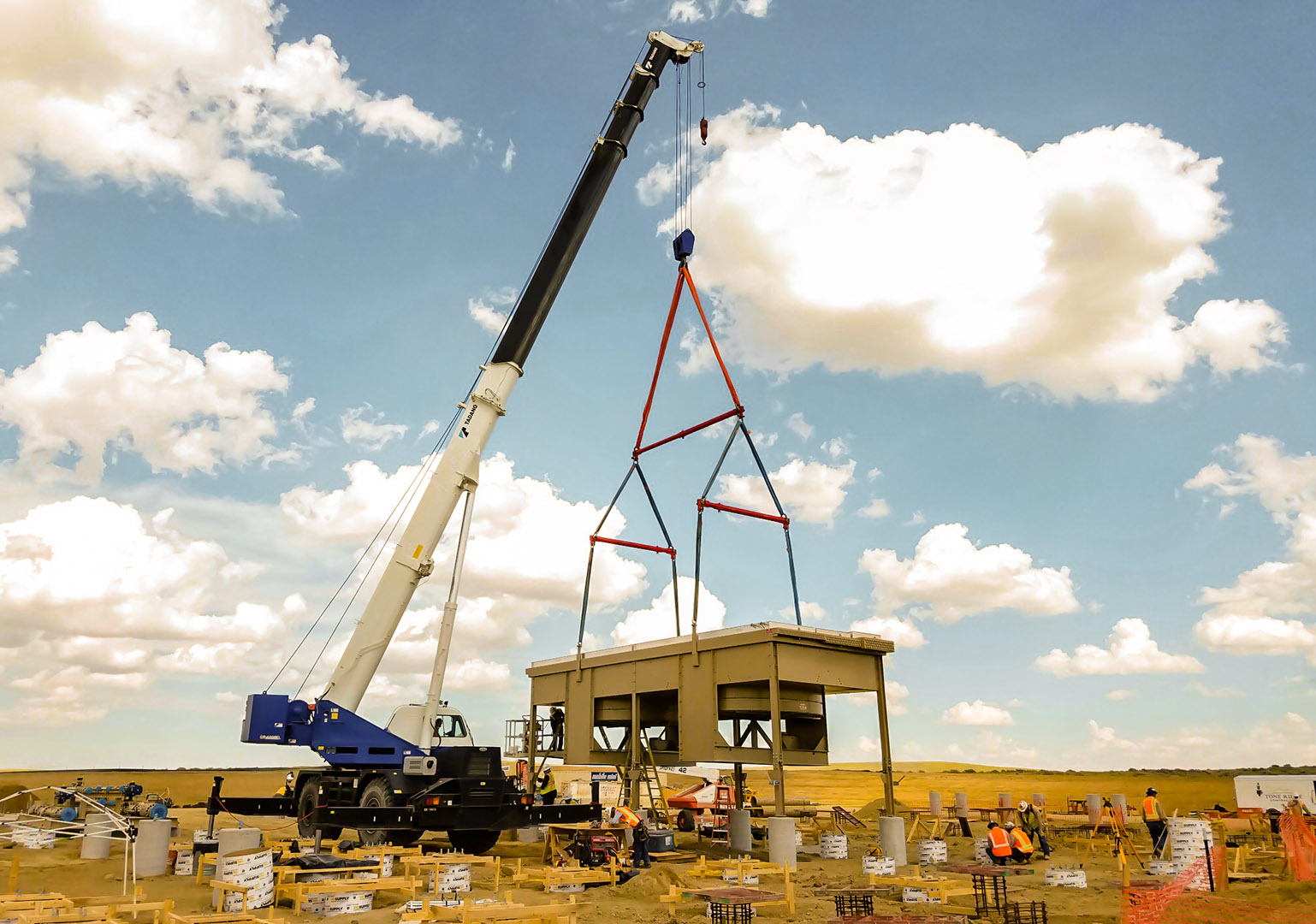
Rough-Terrain Cranes are proven to be an effective support crane option for your project. These machines require minimal mobilization costs, take less time to build, and have the capabilities to take care of all the supporting lifts required with larger cranes.
Maintained & Certified
Our team works hard to keep our late-model fleet of Rough-Terrain Cranes well-maintained, certified, and always ready for crane support on your next project.
Browse Crane Library
Tech Specs | Crane Capabilities | Load Charts
Frequently Asked Questions
What are rough-terrain cranes designed for?
Rough-terrain cranes are designed specifically for off-road job site conditions where traction, maneuverability, and stability are important. At RMS Cranes, we frequently provide these cranes for construction, renewable energy, oil and gas, and industrial projects throughout Colorado, Wyoming, and New Mexico.
Their large tires, all-wheel drive systems, and compact design allow them to move across uneven ground while maintaining strong lifting performance. This makes them especially useful on undeveloped or remote job sites where paved access may be limited.
What are the benefits of using a rough-terrain crane?
Rough-terrain cranes offer several advantages on active job sites. Compared with standard truck cranes, they generally provide stronger off-road performance, tighter turning radiuses, improved traction, and enhanced maneuverability.
Their lower center of gravity and all-wheel steering systems help maintain better control on uneven terrain. These features make rough-terrain cranes valuable for energy developments, infrastructure projects, industrial facilities, and remote construction sites where conditions can change quickly throughout the project.
What lifting capacities are available for rough-terrain crane rentals?
At RMS Cranes, we offer rough-terrain cranes ranging from 30 tons to 160 tons in lifting capacity. This allows contractors to select equipment based on the exact size and complexity of the lift.
Smaller rough-terrain cranes are often used for support lifting, material handling, and general construction work. Larger models can assist with heavy industrial components, infrastructure projects, and energy sector applications where higher capacities are required.
Why are rough-terrain cranes commonly used as support cranes?
Rough-terrain cranes are frequently used as support cranes because they mobilize quickly, require minimal assembly time, and can efficiently handle smaller supporting lifts around larger crane operations.
On wind energy, industrial, and infrastructure projects, support cranes are commonly used to move materials, assist with equipment assembly, and complete secondary lifting tasks throughout the construction process. Their mobility and flexibility help improve overall job site productivity.
Are your rough-terrain cranes maintained and certified?
Yes. At RMS Cranes, we regularly maintain, inspect, and certify our rough-terrain crane fleet for active job site operations. Routine maintenance and inspections are important for crane reliability, operational performance, and lifting safety.
Using properly maintained equipment helps reduce downtime while supporting safer and more efficient lifting operations across demanding project environments throughout the Rocky Mountain region.